
Sourdough Starter Troubleshooting: How to Diagnose, Fix, and Keep Yours Alive (Without Losing Your Mind)
- Nicole Fairbanks

- Mar 29
- 11 min read

If you've ever stood over a jar of sourdough starter, squinting at it going "is this... alive?" — welcome. You're in exactly the right place.
Maybe it smells a little funky. Maybe it's not rising like you expected. Maybe you Googled something at 10pm and ended up down a rabbit hole that made everything worse. (We've all been there. The sourdough internet is intense.)
Here's what I want you to know before we go any further: your starter is probably fine. You've just never been shown how to actually read it.
This guide is going to fix that. And if you ever just need a quick answer without reading a whole post, I built the Sourdough Starter Aid Tool exactly for that moment.
What a Sourdough Starter Actually Is (And Why It's Weird on Purpose)
At its most basic, a sourdough starter is just flour, water, wild yeast, and bacteria doing their thing together in a jar. That's it. No magic, no mystery.
But here's why people often find themselves in a place of frustration (even if hey aren't actually aware of it): it's alive, which means it reacts to everything. Temperature. The flour you use. How long it's been since you fed it. What mood the kitchen is in. (Okay, not that last one. But it feels like it sometimes.)
It's not uncommon for people to get completely overwhelmed with sourdough and quit before they even really get started. It is a bit intimidating between keeping your starter healthy and alive, and with learning how to make it fit into your life (without letting it define you).
Because it's constantly responding to its environment, it's also constantly changing. It's not supposed to look the same every single day, and once you make peace with that, about 90% of your sourdough stress just... evaporates.
How to Get a Sourdough Starter (3 Options, Ranked Honestly)
Option 1: Make Your Own
The classic route. You mix flour and water, feed it daily for about a week, and somewhere around day 5 to 7, bubbles appear and the thing starts to rise on its own.
It's the cheapest option and honestly, kind of satisfying. It's also the most inconsistent, and it requires patience that not everyone has when they're trying to bake bread next week.
Basic method:
Day 1: Mix equal parts flour and water
Days 2-7: Discard half, then feed with fresh flour and water daily
Day 5-7: Look for bubbles, a noticeable rise, and a tangy smell
If you have the time and like the project of it, go for it. If you want to actually bake bread soon, keep reading.
Option 2: Get One From a Friend
Genuinely the most underrated option. A starter from someone who already bakes is already active, already adapted, and already forgiving of beginner mistakes. Ask around. More people have starter than you'd think, and bakers love to share it.
Option 3: Buy One (Fastest and Most Reliable)
This is where I'd point most beginners. Two solid options:
King Arthur Baking Starter — reliable, consistent, and great for beginners.
Lazy Antelope Starter — a heritage-style starter worth looking into if you want something with a little more character. The "1000 year old' Italian Starter is one of my personal favorites.
A quick note on "1000-year-old starters" and "monastery starters": yes, they're marketed that way, and no, you shouldn't roll your eyes at it. The microbes adapt to your environment over time, so what you end up with becomes yours anyway. Heritage starters tend to be stable and easy to revive, which matters a lot when you're just getting started.
What a Healthy Starter Actually Looks, Smells, and Does
Before you can troubleshoot anything, you need a baseline. Here's what you're looking for:
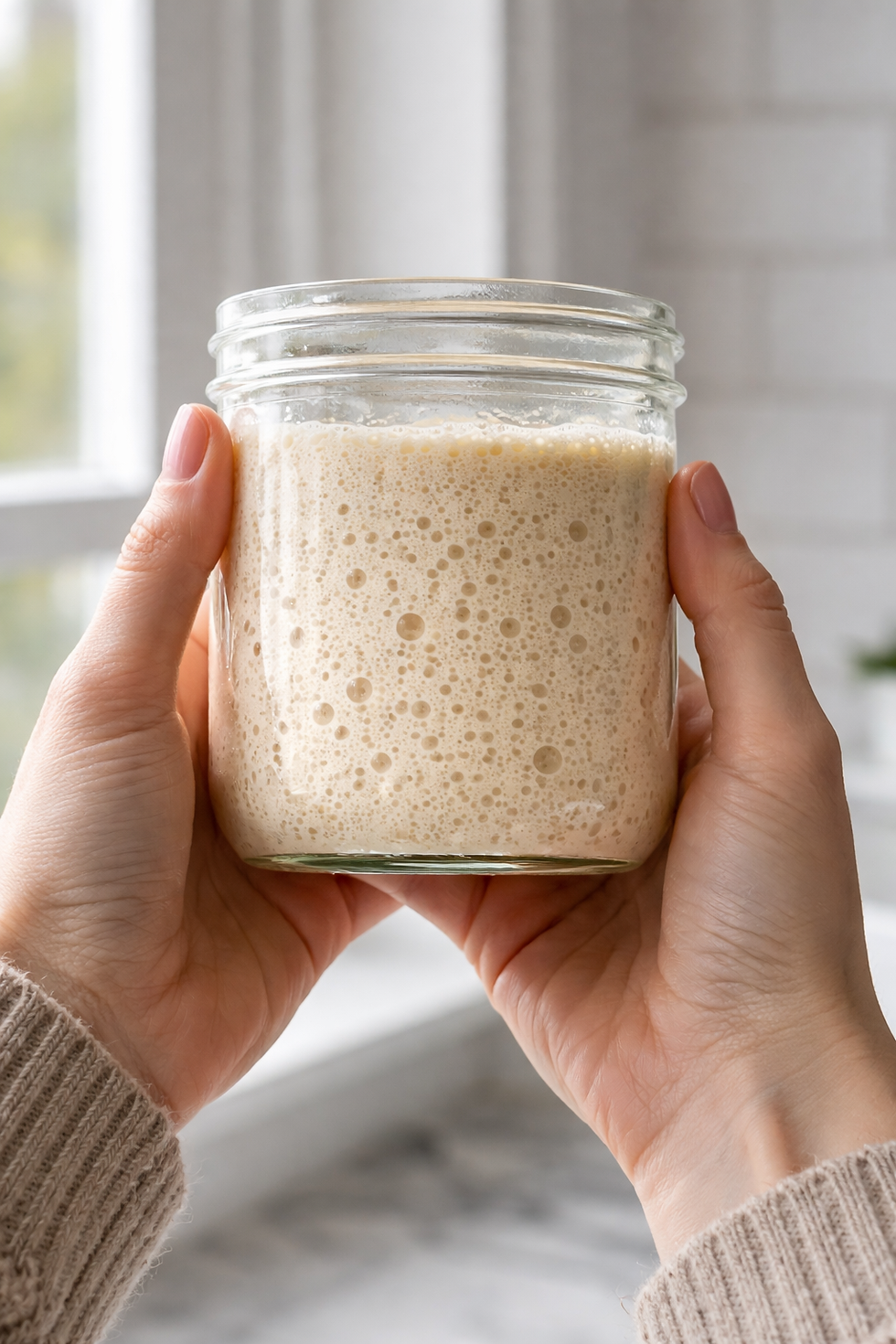
It looks like: bubbly, airy, slightly domed at its peak, and noticeably larger than when you fed it. It should double in size, sometimes more.
It smells like: tangy, slightly sour, maybe a little fruity or yogurt-like. Pleasant, even. Not offensive.
It acts like: it rises after feeding, hits a peak, then falls back down. It responds when you move it somewhere warmer. It's predictable once you understand what it's reacting to.
The Most Important Rule: Read the Starter, Not the Clock
I say this all the time and I'll keep saying it: forget the rigid schedule. Your starter doesn't know what time it is. It cares about three things:
Temperature
Food (flour)
Time
When all three are in balance, it does exactly what it's supposed to do. When one is off, you'll see it. And that's actually great, because it means the starter is telling you what it needs. If you want to go deeper on this, my guide Good Bread, Not Perfect Bread is built entirely around reading your dough instead of chasing a schedule.
There is an easy way to track your starter feeding schedule so you always know what feeding ratio was used, and you can track your observations. Download the free Sourdough Starter Feeding Log, and never question yourself again. It will give you the peace of mind you need to feed and bake with confidence.
Sourdough Starter Troubleshooting Basics: Feeding Ratios, Actually Explained
You've probably seen ratios written out like 1:1:1 or 1:2:2 and thought "okay but what does that mean for my actual life." Fair question.
It'simply: starter : flour : water
So 1:2:2 means for every 1 part starter, you add 2 parts flour and 2 parts water. That's it.
For most busy bakers, here's where to start:
Baking most days: 1:2:2 once a day keeps things moving without a lot of fuss
Starter seems hungry all the time: bump up to 1:3:3 or even 1:5:5 to slow it down and give it more to eat
Smells like acetone or alcohol: it's starving — feed it more frequently or at a higher ratio
Higher ratios mean your starter eats more at once and takes longer to peak. Lower ratios mean it peaks faster. Once you understand that, you can dial it in to fit your actual schedule.
That Gross Liquid on Top Is Not a Crisis
That dark, watery liquid sitting on top of your starter is called hooch, and it means exactly one thing: your starter is hungry.
That's it. It's not dead. It's not ruined. It's just been sitting there waiting for you to feed it.
Fix: pour off the hooch (or stir it in if you want a more sour flavor), feed your starter, and carry on. Done. This is one of the most common things that happens and one of the easiest to fix. If you want a quick reference you can stick on your fridge, grab the free Sourdough Starter SOS guide.
Tired of Googling "why does my starter smell weird" at 9pm?Grab the free Sourdough Starter SOS guide — a no-fluff fridge reference that tells you exactly what's wrong and exactly what to do. Print it, stick it on your fridge, and never panic-Google again.

Why Your Starter Isn't Rising (And How to Fix It)
This is the big one. This is the question that sends people Googling at midnight. Let's just handle it.
It's underfed. Feed more often or increase your ratio. If you've been doing 1:1:1 and things aren't moving, try 1:2:2 and give it a few cycles.
It's too cold. A cold kitchen will slow your starter way down. Move it somewhere warmer — the top of the fridge, near your oven, or try the oven-with-just-the-light-on trick (no heat, just warmth from the bulb).
The flour is weak. All-purpose flour works fine for maintenance, but if your starter is sluggish, try adding a little whole wheat or rye flour to your next few feedings. The extra nutrients help.
You're using it at the wrong time. Your starter should be used when it's at or near its peak — doubled in size, bubbly, and domed. If you wait until after it's peaked and started falling, you've missed the window. I like to perform "the float test." If a small scoop of your starter floats when dropped into a cup or bowl of water- you are good to go.
Getting That "Doubles or Triples" Rise
When your starter reliably doubles or more after feeding, that's the goal. To get there consistently: feed at higher ratios, keep it warm during the rise, use strong flour occasionally, and use it before it peaks, not after.
The science is simple: yeast eats flour, produces gas, gas creates rise. If it's not rising enough, it's not eating enough.
Counter vs. Fridge: What Busy People Should Actually Do
Counter storage is great if you bake every day or close to it. You feed it daily, it stays active and ready. It's also a lot of commitment. If you choose this method, only maintain a small amount of starter to prevent to much waste. 20-30 grams is plenty. Then before you bake you feed it more to ensure you have enough starter for your recipe.
Fridge storage is what I recommend for most people. It slows everything way down, which means you only need to feed it about once a week. When you're ready to bake, you pull it out, feed it, let it double, and use it. That's it. The whole routine.
No babysitting. No guilt if you skip a day. No starter anxiety. If you're baking once or twice a week, the fridge is your friend. Full stop.
Sourdough Starter Smells: A Quick Guide
Nail polish remover or acetone: your starter is starving, feed it more frequently.
Strong vinegar smell: over-fermented, feed it and let it reset.
Alcohol-y: needs food, try a higher feeding ratio.
Yeasty, tangy, slightly sweet: healthy and happy, you're good.
Truly rotten: possible contamination, keep reading...
A healthy starter smells tangy. Not offensive. Not like something died. If it smells bad but not rotten, it almost always just needs to be fed more regularly.
When to Actually Throw It Away (It's Rare)
Most starter "problems" are totally fixable. But there are a few signs that mean it's time to start fresh:
Pink or orange streaks (that's mold contamination).
Fuzzy visible mold growth.
A smell that's genuinely putrid, not just sour.
If none of those apply? Keep feeding it. It's probably going to be fine.
Does sourdough feel frustrating at times? Like you just can't seem to get it right? To the point you consider just giving it up all together? Well, before you go hanging up your apron, come on over and read Why Your Sourdough Failed, and Why it's Not Your Fault. You just might gain some new perspective... and you will likely decide to keep on going.
The Lowest-Effort Sourdough Starter Routine
Here's the version that actually works for everyday life:
Fridge method (recommended for most people):
Keep your starter in the fridge with a loose lid.
Feed it once a week — even if you're not baking.
When you want to bake: pull it out the night before, feed it, let it double.
Use it at peak, put the rest back in the fridge.
That's the whole thing. No elaborate schedule. No special equipment. No waking up at 6am to feed a jar of bacteria.
Tools Worth Having (And Nothing Else)
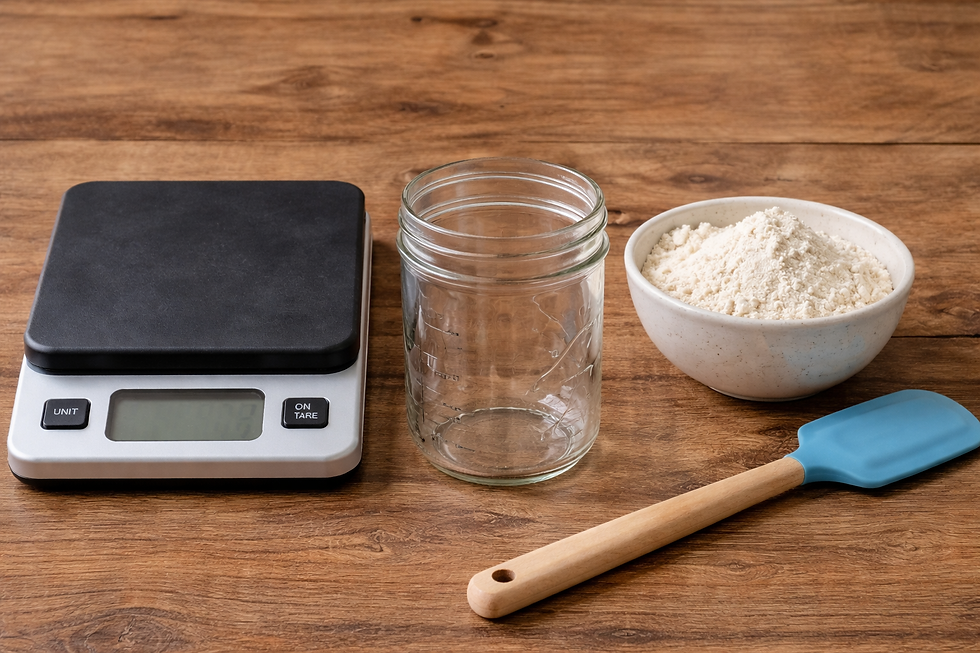
You don't need much. Here's what actually makes a difference if you are curious (I started with just basic kitchen tools, no scale, and it was fine):
Wide-mouth glass jar with a lid — shop on Amazon
Kitchen scale (weight measurements are way more reliable than volume) — shop on Amazon
Silicone spatula for mixing and scraping — shop on Amazon
Optional but genuinely useful once you get more serious:
Banneton basket for shaping — shop on Amazon
Dough scraper — shop on Amazon
Ready to actually bake with that starter?My guide Good Bread, Not Perfect Bread is built for people who want real bread without rigid rules. No 47-step processes. No baking on a schedule that doesn't fit your life. Just flexible, forgiving sourdough that actually works.
Want a Faster Answer? Use the Starter Aid Tool
Sometimes you're mid-bake, your starter looks weird, your toddler is losing it, and you do not have time to read a blog post. That's exactly what the Sourdough Starter Aid Tool is for. You tell it what your starter is doing, it tells you what's wrong and what to do next. No guessing. No Googling. Just an answer.
And If You Want the Bigger Picture
Everything I teach about sourdough comes back to the same idea: flexible beats rigid, every single time. The problem most people have isn't the sourdough — it's the expectation that it has to be perfect to be worth doing. My guide Good Bread, Not Perfect Bread is built around exactly that. Baking that actually fits your life, not the other way around.
Not ready for the full guide yet? Start with the free Sourdough Starter SOS and keep it on your fridge for the moments when something looks off and you just need a straight answer.
The Short Version (For When You Just Need Someone to Tell You It's Fine)
If your starter smells a little weird, looks a little different than yesterday, or hasn't risen as dramatically as you expected — it's probably fine.
It needs food. It needs warmth. It needs time.
Feed it, give it a warm spot, and check back in a few hours. Nine times out of ten, that's all it was waiting for.
Sourdough is one of the most forgiving things you can bake, once you stop trying to control it and start learning to read it instead.
Have a starter situation I didn't cover here? Drop it in the comments. I love a good sourdough mystery.
Come hang out where sourdough isn't a personality.Join Sourdough Without the Trend on Facebook — a no-judgment community for people who just want to bake good bread without the overwhelm. Bring your weird starter questions. We've seen it all.
Frequently Asked Questions (FAQ's)
How do I know if my sourdough starter is dead?
It's rarely actually dead. If it's not rising, smells like acetone or alcohol, and has hooch on top, it's just hungry. Feed it daily for 3 to 5 days at a 1:2:2 ratio in a warm spot and see what happens. True signs it's gone for good: pink or orange streaks, fuzzy mold, or a genuinely putrid smell — not just sour or funky.
How often should I feed my sourdough starter?
It depends on where you store it. On the counter, once a day. In the fridge, once a week is plenty. The fridge method is honestly what I recommend for most people who aren't baking every single day.
Why does my sourdough starter smell like nail polish remover?
That acetone smell means your starter is starving. It's producing excess acids because it's run out of food. Feed it at a higher ratio (try 1:3:3 or 1:5:5) and give it a warm spot to recover. It should smell more tangy and yeasty within a day or two.
Can I use my sourdough starter straight from the fridge?
Technically yes, but you'll get much better results if you feed it first and let it peak before using it. Pull it out the night before you want to bake, give it a feed, let it double, then use it. That's the sweet spot.
What flour is best for sourdough starter?
All-purpose flour works fine for everyday maintenance. If your starter is sluggish or you're just getting started, mix in a little whole wheat or rye flour — both have more nutrients and natural wild yeast that help things get moving faster.
How long does it take for a sourdough starter to be ready to use?
If you're making one from scratch, about 7 to 14 days of daily feedings before it's reliably active. If you buy a starter or get one from a friend, it can be ready in just a couple of days. A starter is ready when it doubles consistently after feeding, smells tangy, and passes the float test (a small spoonful dropped in water should float).
What is sourdough discard and can I use it?
Sourdough discard is the portion you remove before each feeding to keep the quantity manageable. It's not as active as a freshly fed starter, but it's absolutely not trash. You can use it in pancakes, crackers, waffles, and plenty of other recipes. Some of my favorite recipes are from The Pantry Mama.
Always happy to help,
Nicole
This post contains affiliate links, which means I may earn a small commission if you purchase through a link at no extra cost to you. I only link to things I would actually use.
---------------------------------------------------------------------------------------------------------------------------
Explore more sourdough related content that I have written here.
And, if you have a few extra minutes, take a look at the website I've been developing. You'll discover some excellent money-saving tools, and insights into what in your home will last long term, and what you may be losing money on over time.
I recently created a system that provides a personalized Home Reset plan for low-energy days. It's definitely worth a visit!
Affordable Actually is based around the concept "If it doesn't last- it's not affordable."
Buy once. Choose well. Build a home that supports your family long-term.


Comments